
Biopics That Made Bollywood History: From Dr. Kotnis to Sanju, Uri, and Padmaavat
Biographical films that are commonly known as biopics have been as an cornerstone of the storytelling traditional the industry. From the very beginning, the industry had V. Shantaram’s Dr. Kotnis Ki Amar Kahani (1946), which paved the way for a new genre of cinema and from that time, the industry has continuously drawn inspiration from real-life figures that range from brave and fierce warriors to fearless revolutionaries as well as the complex political figures as well as various underdog artists.
In terms of contemporary cinema, various movies such as Sanju (2018), Uri (2019), and Padmaavat (2018) carry forwarded this legacy by blending the dramatic storytelling within the flairs modern cinematics. These films not only entertain us, but also document the socio-political tapestry of the nation by playing an pivoyal role in both preserving history as well reflecting on the evolving narrative of the nation.

The First Chapter: V.Shantaram's Dr. Kotnis Ki Amar Kahani

Celebrating Historical Icons: From Prithvi Vallabh to Mirza Ghalib
In fact, Sohrab Modi himself made several such films like Prithvi Vallabh (1943), Jhansi Ki Rani (1953), Nausherwan-E-Adil (1957) and of course his career's most successful film Mirza Ghalib (1954) based on Ghalib, one of the greatest Indian Poet ever born in the Indian subcontinent. Actor Bharat Bhushan played Mirza Ghalib quite convincingly. The film won a National Award for best film.
The Mughal Era on Screen: Emperors, Love Stories & Power Struggles
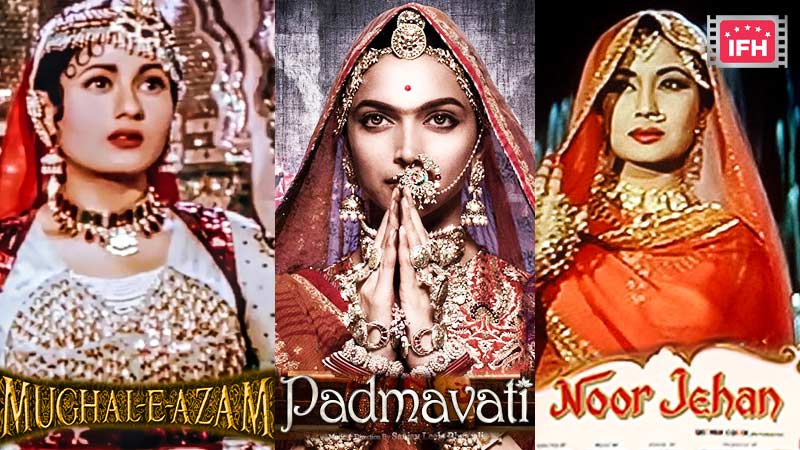
In fact, many filmmakers made movies on the Mughal Emperors like Humayan (1945) and Babar (1960), the first Mughal Emperor who invaded India. Later two films were simultaneously made on the life of King Akbar and the love story of Anarkali and Prince Salim (who was later called Emperor Jahangir). The films were Anarkali (1953) and Mughul-E-Azam (1960). A film was made on King Shahjahan’s life called Taj Mahal (1963). A film was also made on the life of emperor Shahjahan's daughter Jahan Ara (1964), and one film was made on the wife of Emperor Jahangir called Noorjahan (1968).
The golden era also witnessed a few biopics on the life of cruel and brutal foreign invaders who looted India and exploited but fearless Indians gave them a tough fight. Like Sikander-E-Azam (1965). The role of cruel Alexandra was played by Dara Singh. Brilliant actor Pran played the role of malicious Chinese invader Halaku (1956) superbly. Likewise, action hero Sheikh Mukhtar played the evil Mongol rule Changez Khan to a perfect T. Recently, actor Ranveer Singh gave a super performance of the ruthless king Sultan Alauddin Khilji, who attacked India to seek beautiful Rani Padmavati in the film Padmaavat (2018).
Warriors, Revolutionaries & Unsung Heroes: Bollywood’s Salute to Valor
Post-independence, the rise of nationalistic pride gave filmmakers ample inspiration to chronicle the lives of freedom fighters and revolutionary heroes. Films like Shaheed (1965), featuring Manoj Kumar as the fearless Bhagat Singh, sparked patriotic fervor across the nation. Later iterations, such as The Legend of Bhagat Singh (2002) starring Ajay Devgn and Rang De Basanti (2006), which interweaves contemporary youth with historic martyrs, breathed new life into the genre. These films weren’t just biographical narratives — they were sociopolitical statements, stirring dialogue and debates on patriotism, duty, and activism.
Similarly, Sardar (1993), with Paresh Rawal as Sardar Vallabhbhai Patel, highlighted the Iron Man of India’s pivotal role in unifying the nation post-partition. These films remind viewers of the sacrifices made by unsung heroes and help to reinforce national identity and pride through cinema.
Biopics Beyond Borders: Global Impact of Indian Icons
Biopics also began embracing Indian figures who had global resonance. Gandhi (1982), though directed by British filmmaker Richard Attenborough, cast Ben Kingsley in the titular role and remains one of the most powerful portrayals of Mahatma Gandhi. This Academy Award-winning film showed how Indian historical figures had stories that transcended borders.
Similarly, The Man Who Knew Infinity (2015) celebrated the mathematical genius Srinivasa Ramanujan and showcased Dev Patel in a powerful performance. Though it’s a British production, it speaks to the importance of Indian biographical narratives in world cinema.
Musical Maestros & Artistic Visionaries
Bollywood hasn’t shied away from telling the stories of legendary musicians, poets, and actors who transformed India’s cultural landscape. Sur Sangam (1985) was loosely based on Tansen, the legendary musician from Akbar’s court. Meanwhile, Bhaag Milkha Bhaag (2013) told the inspiring story of the Flying Sikh, Milkha Singh, combining exceptional athletic achievement with the trauma of Partition.
Films like Bandit Queen (1994), directed by Shekhar Kapur, dramatized the real-life story of Phoolan Devi, turning her tale of oppression and rebellion into a global phenomenon. The raw intensity of Seema Biswas’s performance won accolades worldwide and pushed Indian biopics to bolder, grittier storytelling.
Celebrating Women in Biopics: From Queens to Trailblazers
The biopic genre has also served as a powerful platform for exploring the lives of courageous women. Rani Laxmi Bai has been portrayed several times, most recently in Manikarnika: The Queen of Jhansi (2019), starring Kangana Ranaut, which paid homage to the warrior queen’s valiant stand against British colonial rule.
Neerja (2016), based on the life of air hostess Neerja Bhanot who sacrificed her life saving passengers from hijackers, showcased Sonam Kapoor in one of her most compelling roles. Similarly, Gunjan Saxena: The Kargil Girl (2020) chronicled the story of one of India’s first female combat aviators, further emphasizing the expanding scope of biopics to embrace modern female icons.
Political Titans on Screen: From Controversy to Glory
Politics has long been a fertile ground for Bollywood biopics. Indu Sarkar (2017), set against the backdrop of the Emergency, subtly referenced Indira Gandhi’s regime, though it sparked debates over historical accuracy. On the other hand, Thackeray (2019), starring Nawazuddin Siddiqui, portrayed the rise of the fiery and controversial Shiv Sena leader Bal Thackeray with unapologetic intensity.
More recently, The Accidental Prime Minister (2019) attempted a cinematic take on Dr. Manmohan Singh’s tenure as Prime Minister. While opinions were divided, it emphasized the growing appetite for political storytelling in the biopic genre.
The Rise of the Modern Biopic: Blending Drama with Documentary
Today’s biopics such as Sanju (2018), based on the tumultuous life of actor Sanjay Dutt, reflect a shift toward blending factual accounts with dramatic embellishments. Ranbir Kapoor’s transformative performance and Rajkumar Hirani’s narrative style sparked both critical acclaim and controversy over whether the film sought to redeem Dutt’s public image.
Uri: The Surgical Strike (2019), though not a direct biopic, dramatized a real military event and presented Vicky Kaushal as Major Vihaan Singh Shergill in a fictionalized tribute to the Indian Army. It struck the right chord with audiences and became one of the highest-grossing Bollywood films ever.
Likewise, Padmaavat (2018), though rooted in legend rather than verified history, presented a stylized version of Rani Padmavati’s resistance against Alauddin Khilji’s lustful ambition. With opulent sets and dramatic storytelling, Sanjay Leela Bhansali redefined the boundaries of historical epics in Bollywood.